
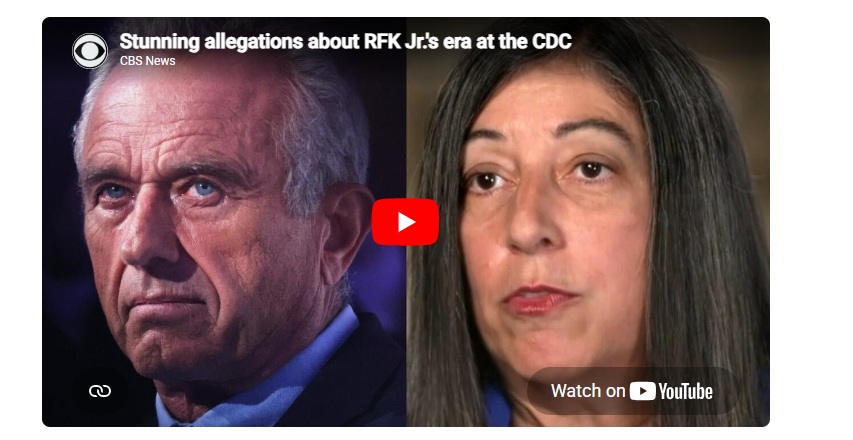
She Kept the Receipts
Starting in 2025, Dr. Debra Houry began saving her own emails while she was still serving as the CDC’s chief medical officer. By the time she resigned last August, that collection had grown to 250 pages. She told Margaret Brennan on Face the Nation that she knew, even at the time, that someone would eventually need proof of what was happening. Senate Democrats later released the emails, and they lay out how decisions were actually made during Secretary Robert F. Kennedy Jr.’s first months in office — a period he entered promising radical transparency and gold-standard science.
What Alarmed Her First
The first thing that alarmed Houry was the flu shot ads. The day after Kennedy was sworn in, his office ordered the CDC to pull its flu vaccination campaign — including the “Wild to Mild” ads. This happened mid-season, during what was reportedly the deadliest flu season for children on record outside of a pandemic year.
The agency’s own communications chief put his objection in writing at the time, warning that stopping the campaign carried “significant reputational risk” and likely legal problems. The ads came down anyway.
HHS has disputed this account before. When STAT News first reported the pulled ads in February 2025, a spokesperson accused CDC officials of intentionally falsifying and misrepresenting the guidance they’d received. What’s different now is that the internal emails — written at the time by the people actually carrying out the order — are public.
The Measles Data Pull
During the worst measles outbreak in 25 years, a Kennedy aide asked Dr. Houry for 15 years of case data — covering every affected child and every condition they had.
Here’s the context she gave: that same week, Children’s Health Defense, the anti-vaccine group Kennedy used to lead, claimed one of the children hadn’t actually died of measles. Her reading is that the data pull was meant to back up that claim. The emails show the request itself; they don’t show the motive behind it. What they do show is the cost: fulfilling it would have pulled staff off an active outbreak response. She wrote back that the outbreak had to come first.
Did She Ever Get to Make Her Case?
No. Over roughly six months as the agency’s top doctor under Kennedy, Houry met him once, for about a minute, when he visited the Atlanta campus after the shooting there. She was never allowed to formally brief him. Her directors running the vaccine and COVID programs reportedly never spoke with him at all.
Meanwhile, she says, people with no medical background were overruling career scientists, while layoffs had gutted the agency. She resigned because she felt she could no longer protect the science. Along with ousted CDC Director Susan Monarez, she told this same story to the Senate under oath last September — and the emails now provide the paperwork behind that testimony.
Why Her Email Archive Matters
Federal health policy is supposed to leave a public record: advisory committee votes, written directives, published data. Under Kennedy, Houry says, it often didn’t. She’s described learning about a change to COVID vaccine guidance from a social media post — which then forced CDC officials to ask HHS for a written memo, since they couldn’t implement policy off a tweet.
When the official record thins out, the people inside start keeping their own. That’s what her 250 pages represent — a record that exists because the official channels stopped producing anything anyone could rely on. She calls it simply “good clinical practice”: what a careful doctor does when a case is going wrong — document everything in real time, before anyone has to ask.
What Should Parents Do?
For parents, the practical question is the vaccine schedule. After the federal schedule was rewritten in January — with several vaccines dropped or downgraded — the American Academy of Pediatrics published its own 2026 schedule, keeping the routine recommendations intact. In March, a federal judge put the CDC’s changes on hold.
So for now, your pediatrician should still be following an evidence-based schedule. At your next visit, it’s worth asking whether it’s the AAP’s.